
The Trojan Women: the first accessible performance at Epidaurus
For the first time, a performance at the Ancient Theatre of Epidaurus is presented with accessibility services for audiences with sensory disabilities. On July 31, 2026, the National Theatre of Greece stages Euripides’ The Trojan Women, directed by Eleni Efthymiou, marking a significant moment for Greek theatre and a meaningful step toward opening it up to broader audiences.
liminal leads the design and implementation of the accessibility services, ensuring equal access to the performance experience for all. We are proud to be part of this milestone for accessibility and look forward to welcoming you.
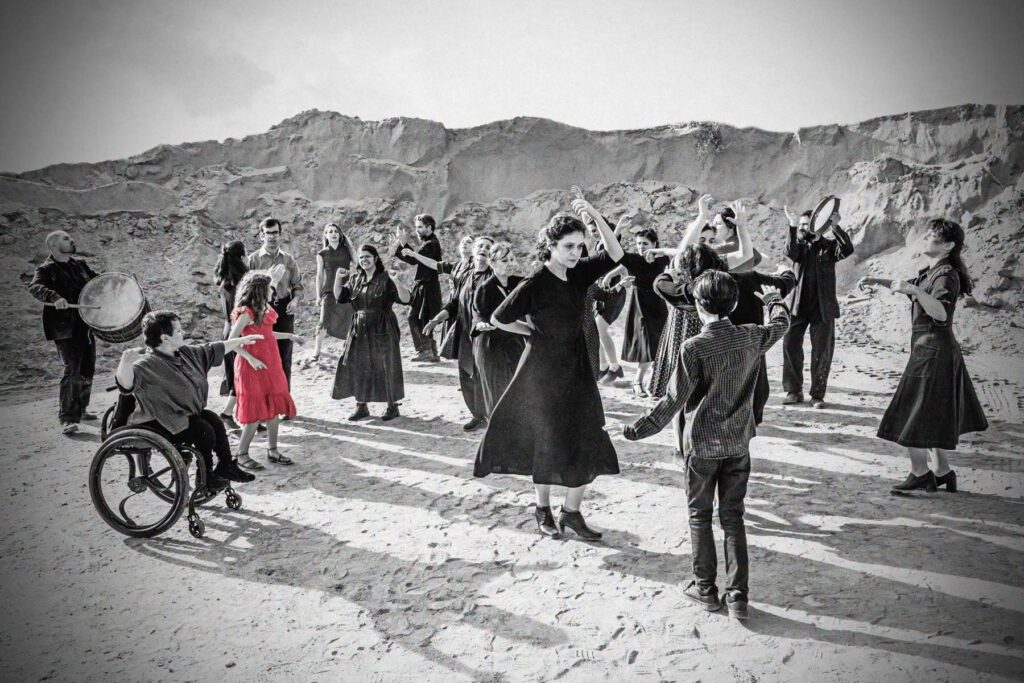
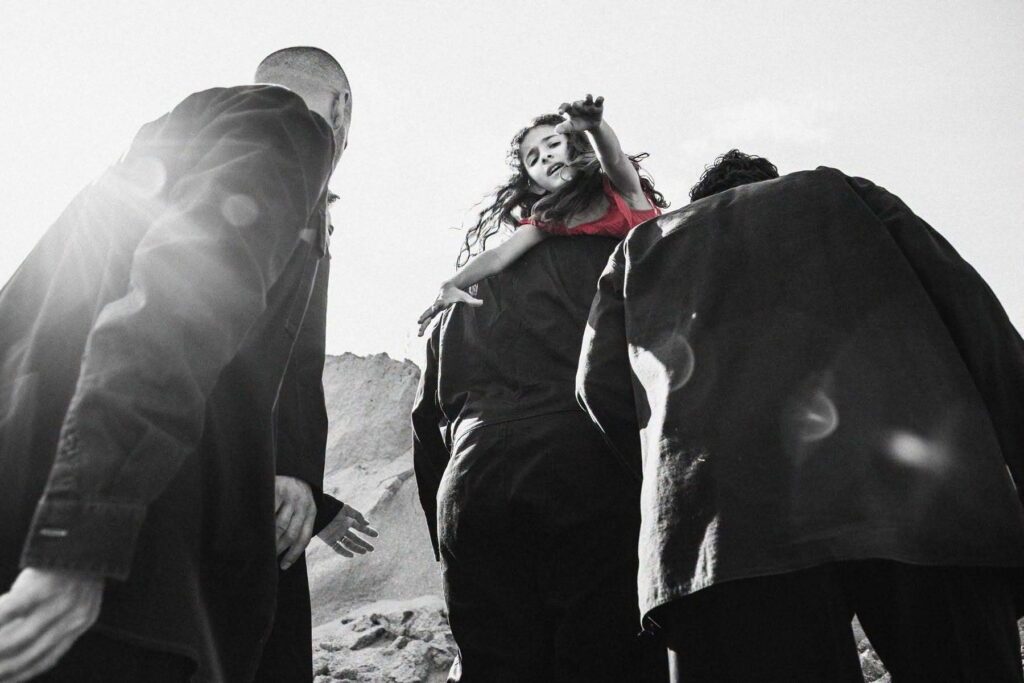
Twenty-two performers of different ages, with and without disabilities – including three on-stage musicians and actors from the En Dynamei Ensemble – foreground the musicality of the play through different bodies, voices, and experiences.
A distinctive reading of the play about the horror and absurdity of war, seen through the prism of the female body, which asserts its autonomy even under occupation.
About the Performance
In Euripides’ The Trojan Women, the bodies of women were not always held in captivity. Although they belonged to a deeply patriarchal society, they were — by the standards of their time — free: they had choices, dreams, and the possibility of a life with dignity.
As the end of an era approaches — of a life once glorious and at times merely bearable, of their very own history — the Trojan Women speak of the horror of war through the lens of the (female) body, which senses that it is about to be objectified and dehumanised.
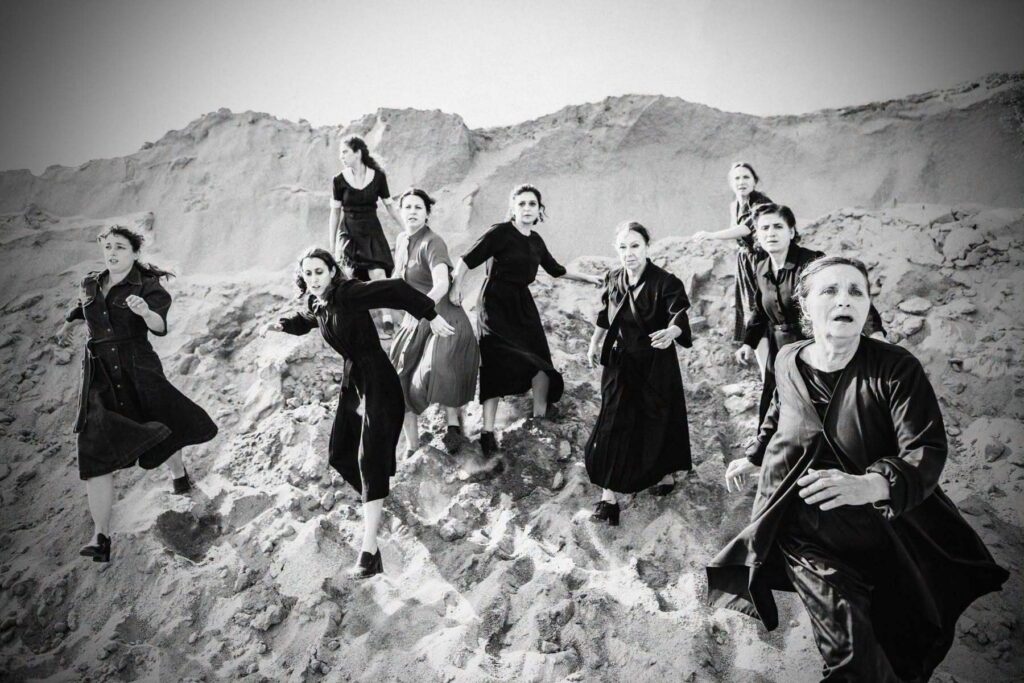
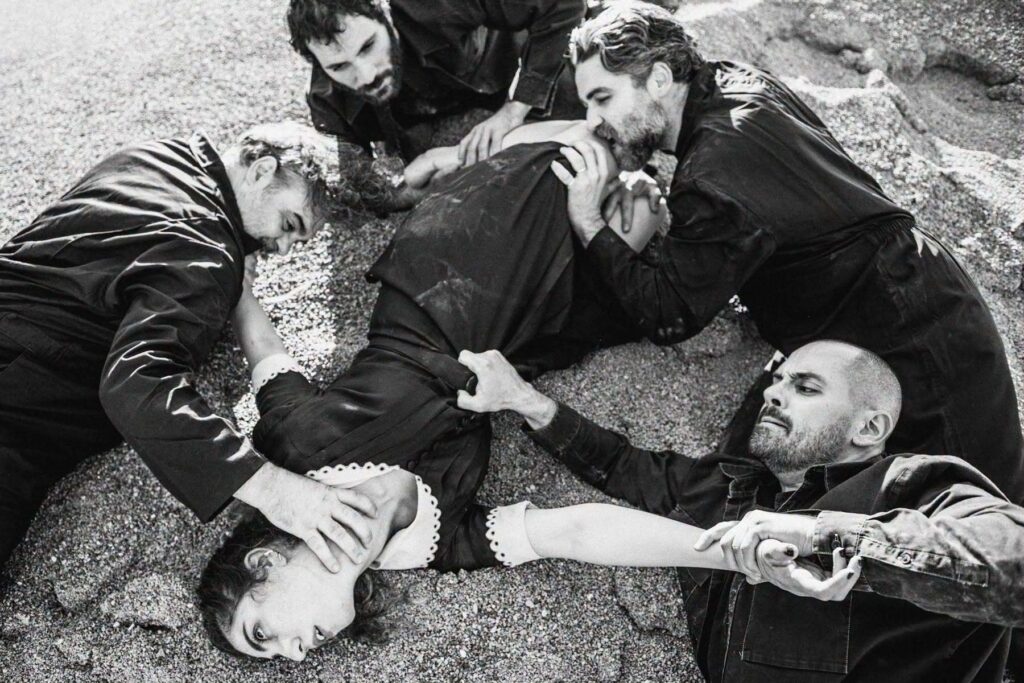
In Efthymiou’s Trojan Women, it is not only the beautiful, healthy, and privileged women of Priam’s family who await their destiny.
It is also the girls, and the elderly and disabled women, who even before the sack of the city were denied the right to make their own decisions and were rarely allowed to tell their own stories. In this sense, war is “just”: it always reduces the much to the little — and to nothing at all.
If all these skins, souls, gazes, wombs, and memories can be understood as those long oppressed, can the oppressed women of the world reclaim their right to self-determination? To scream their anger and hate, to laugh and lament amidst the chaos and the anguish? Will the women of Troy ever regain their physical autonomy?

Accessibility Services
liminal designs and delivers accessibility services for audiences with sensory disabilities for The Trojan Women, at the very site where theatre once reached its peak. Specifically, these include:
- Interpretation in Greek Sign Language and
- SDH Surtitles for D/deaf and Hard of Hearing people
and also
- Audio Description for people with visual disabilities
Credits
Translation: Yannis Tsarouchis
Adaptation – Direction: Eleni Efthymiou
Dramaturgy consultant: Sophia Eftychiadou
Set design: Evangelia Kirkine
Costume design: Angelos Mentis
Music: Eleftherios Veniadis
Movement: Tasos Papadopoulos
Lighting design: Zoi Molyvda-Fameli
Sound design: Sofia Kamayianni
Music teacher: Melina Peonidou
Dramaturgy: Eva Saraga
Cast (in alphabetical order)
Menelaus: Giorgos Christodoulou
Hecuba: Lydia Fotopoulou
Andromache: Evi Saoulidou
Cassandra: Nancy Sideri
Helen: Vassiliki Troufakou
Talthybius: Argyris Xafis
Astyanax: Michalis Mitsis
Chorus
Myriam Artzanidou, Maria Dachlythra, Eleni Dimopoulou, Nikos Kyparissis, Irini Kourouvani, Loxandra Loukas, Lygeri Mitropoulou, Theano Papavasileiou, Katerina Papandreou, Niki Petala, Chryssa Toumanidou
Accessibility Credits
Surtitling for the D/deaf and Hard of Hearing: Grigoris Stathopoulos
Audio Description Script: Maria Thrasyvoulidi, Anna Dimkou
Audio Description Narration: Maria Thrasyvoulidi
Interpretation in Greek Sign Language: Androniki Xanthopoulou, Tonia Papantonaki, Andreas Plemmenos
Sign Language Artistic Director: Anna Gaitani
Quality Check: Andreas Plemmenos, Anna-Maria Foskolou
Surtitling software: supertitles.gr
Accessibility Services Design: liminal
Co-ordination: Christos Papamichael
The performance becomes accessible in the framework of Alpha Banks’ “Culture for All” programme.
Useful information
Day and time of accessible performance: Friday 31 of July 2026 at 21:00
Location: Ancient Theatre of Epidaurus
Duration: 2 hours
Tickets for disabled people – Companion: 5 euros
How to book tickets
Via email: omadikespoliseis@n-t.gr
Telephone reservations at the Group Sales Office: 2107001468 (Monday to Friday: 09.00-15.00)
For assistance with the reservation process, please contact us by email at info@liminal.eu.
Performance & accessibility sponsor
